

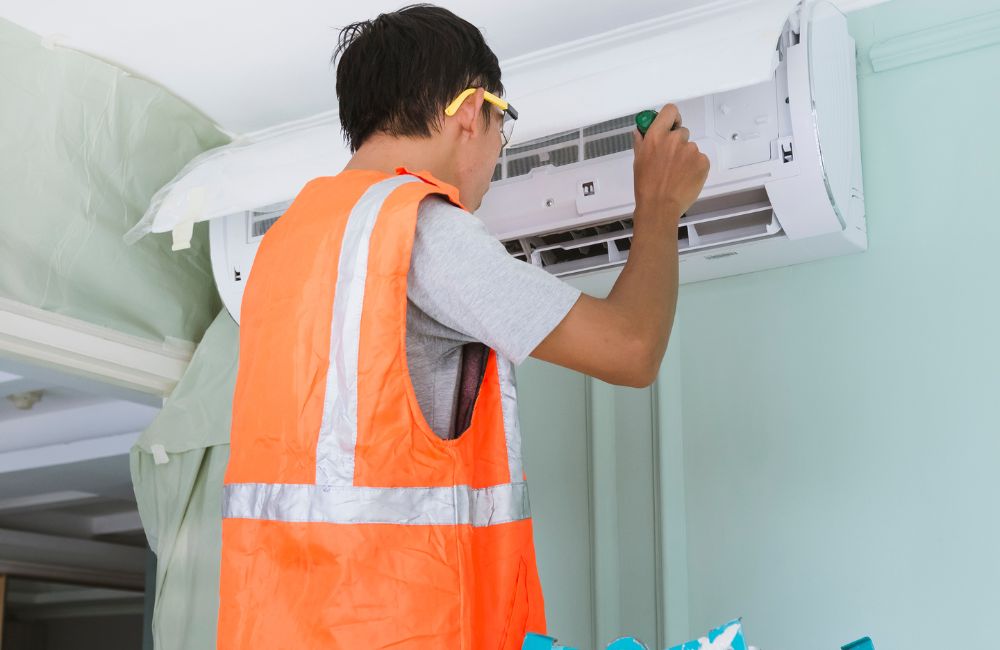
How to Check an AC Thermostat for Common Problems
An air conditioner thermostat controls when the cooling system starts, stops, and maintains the selected indoor temperature. When the thermostat has an incorrect setting, weak batteries, poor placement, or a technical fault, the AC may not cool properly or may turn on and off at unexpected times.
Checking the thermostat is one of the first steps when troubleshooting an air conditioning problem. Basic checks can be completed without opening the HVAC equipment. However, wiring and electrical components should be handled by a qualified HVAC professional.
What Does an AC Thermostat Do?
An AC thermostat measures indoor temperature and communicates the desired temperature to the HVAC control system. When the room temperature rises above the selected cooling setting, the thermostat can send a signal to start cooling.
Modern thermostats may use digital displays, programmable schedules, remote sensors, Wi-Fi connectivity, or other controls. Basic thermostats may provide only temperature adjustment and heating or cooling mode selection.
The thermostat’s location also matters. Direct sunlight, nearby appliances, supply vents, drafts, and other heat sources can affect the temperature measured by the thermostat.
How to Check the AC Thermostat Settings
Start by checking the thermostat display. Make sure the system is set to Cool rather than Heat, Off, or another operating mode.
Set the target temperature below the current indoor temperature. For example, if the room is 80°F, a setting of 72°F should create a cooling demand if the system is operating normally.
Check the fan setting as well. Auto generally allows the indoor fan to operate during a cooling cycle, while On can keep the fan running continuously on many systems.
If the thermostat is set correctly but the AC does not respond, continue with the remaining checks.
How to Check AC Thermostat Batteries
Some thermostats use replaceable batteries. A low battery can cause a blank display, warning message, inaccurate operation, or loss of communication with the HVAC system.
Check the thermostat for a low-battery warning. If the model uses replaceable batteries, install the correct battery type specified by the manufacturer.
After replacing the batteries, confirm that the thermostat display returns to normal. Recheck the cooling mode and temperature setting.
Not every thermostat uses replaceable batteries. Some models receive power directly from the HVAC system or use another power arrangement.
How to Check the AC Thermostat Temperature Reading
Compare the thermostat’s displayed temperature with a reliable thermometer placed nearby. The two readings may not be exactly identical because of sensor location, calibration, airflow, and normal measurement differences.
A significant or persistent difference can indicate a sensor or thermostat problem.
Do not place the thermometer directly in sunlight or next to a heat-producing device. These conditions can produce an inaccurate comparison.
If the thermostat consistently reports an unusual temperature, professional testing may be required.
How to Check the Thermostat Location
Thermostat placement can affect how accurately it measures indoor temperature.
A thermostat should generally be positioned where it can sense representative room conditions. Direct sunlight, exterior doors, windows, kitchen appliances, lamps, supply vents, and other heat sources can influence the sensor.
For example, if a thermostat receives direct sunlight for several hours, it may detect a temperature different from the rest of the room.
If you suspect the thermostat location is affecting operation, an HVAC professional can evaluate the installation and determine whether relocation is appropriate.
How to Check an AC Thermostat That Is Not Responding
A thermostat that does not respond to buttons or touchscreen commands may have a battery, power, display, software, or internal hardware problem.
First, check whether the display is active. For battery-powered models, check the batteries. For systems that receive power from the HVAC equipment, a loss of HVAC power may affect the thermostat.
Check the appropriate circuit breaker if the thermostat and HVAC system appear to have lost power. Do not repeatedly reset a breaker if it trips again.
If the thermostat remains unresponsive, professional diagnosis may be necessary.
How to Check an AC Thermostat That Does Not Start Cooling
If the thermostat is working but the AC does not start, confirm that Cool mode is selected and that the target temperature is lower than the current room temperature.
Some thermostats have a built-in delay before starting the equipment. This delay can protect the compressor from rapid restarting.
If several minutes pass and the system still does not respond, the problem may involve the thermostat signal, wiring, power supply, control board, contactor, capacitor, or another HVAC component.
Do not remove the thermostat from the wall to inspect wires unless you are qualified to work with HVAC electrical controls.
How to Check for an Incorrect Thermostat Schedule
Programmable and smart thermostats can automatically change the temperature based on a schedule.
Check the programmed heating and cooling periods. A schedule may change the temperature at specific times, even when the user expects a constant setting.
Smart thermostats may also use features such as occupancy detection, geofencing, energy-saving schedules, or remote control.
Review the manufacturer’s settings if the thermostat changes temperatures unexpectedly.
How to Check an AC Thermostat for Short Cycling
Short cycling occurs when an air conditioner starts and stops repeatedly before completing normal cooling cycles.
A thermostat problem can contribute to abnormal cycling if it receives incorrect temperature information or sends an incorrect cooling signal.
Check the thermostat location, temperature setting, batteries, and schedule. If the thermostat appears normal but the system continues to short cycle, other causes should be investigated.
Possible causes include restricted airflow, an oversized system, refrigerant problems, frozen coils, electrical faults, or mechanical problems.
How to Check an AC Thermostat for Poor Cooling
A thermostat does not directly create cool air. It controls the cooling demand sent to the HVAC system.
If the thermostat shows a normal temperature but the property remains too warm, check the filter and airflow as part of basic troubleshooting.
If the thermostat indicates that cooling is active but the AC does not maintain the selected temperature, the problem may involve the HVAC equipment rather than the thermostat itself.
An HVAC professional can measure system operation and determine whether the thermostat or another component is responsible.
When Should You Call an AC Repair Professional?
Professional HVAC service is recommended when thermostat checks do not resolve the problem or when wiring and internal components need inspection.
A technician can test thermostat signals, control wiring, system voltage, sensors, control boards, and other HVAC components.
Professional service is also appropriate when the system repeatedly trips a circuit breaker, produces burning odors, shows exposed wiring, or operates unpredictably.
Do not bypass thermostat safety controls or connect wires together as a troubleshooting method. Incorrect electrical connections can damage HVAC equipment and create safety hazards.
AEO: Common AC Thermostat Questions
Answer Engine Optimization, or AEO, focuses on providing direct answers to questions people ask through search engines and AI-powered answer systems.
How do I know if my AC thermostat is working?
Check whether the display is active, the correct operating mode is selected, the temperature setting is appropriate, and the system responds when cooling is requested. If the thermostat appears normal but the system does not respond, professional testing may be required.
What temperature should I set my AC thermostat?
A common residential cooling setting is around 78°F when occupied, but the appropriate setting depends on comfort, building conditions, humidity, equipment, and energy goals.
Why is my AC thermostat not turning on?
Possible causes include depleted batteries, loss of power, incorrect settings, a thermostat fault, or an HVAC system problem.
Why does my AC thermostat show cooling but the AC is not running?
The thermostat may be sending a cooling signal while another component prevents the system from starting. Possible causes include electrical, control, compressor, motor, or other HVAC problems.
Can a thermostat cause an AC to short cycle?
Yes. Incorrect temperature sensing, thermostat placement, scheduling, or thermostat faults can contribute to short cycling. Other HVAC problems can produce the same symptom.
GEO: AC Thermostat Content for Local Search
Generative Engine Optimization, or GEO, helps make service content clear and useful for AI-generated search results.
A local HVAC service page should explain thermostat troubleshooting, AC repair services, supported equipment, common symptoms, and the geographic area served.
For example, an HVAC company serving a specific city can provide relevant information about central air conditioning thermostats, programmable thermostats, smart thermostats, ductless mini-split controls, cooling problems, and HVAC maintenance.
Local business information should remain accurate and consistent across the website and relevant online profiles. This can include the company name, service area, contact details, operating hours, and available HVAC services.
Location-specific information should answer actual customer questions and clearly explain which thermostat and AC services are available in the area.
Frequently Asked Questions
How often should an AC thermostat be checked?
A thermostat can be checked whenever the HVAC system shows unusual behavior. It is also useful to review settings and batteries during routine seasonal HVAC maintenance.
Can low thermostat batteries affect an AC?
Yes. On thermostats that use replaceable batteries, weak batteries can cause display problems or prevent normal thermostat operation.
Why does my AC thermostat say Cool but not work?
The thermostat may be working while another part of the HVAC system has a fault. Possible causes include power problems, control issues, electrical component failures, or mechanical faults.
Can thermostat placement affect AC performance?
Yes. Direct sunlight, drafts, heat sources, and nearby supply vents can affect the temperature measured by the thermostat.
Should I replace my thermostat if my AC is not cooling?
Not necessarily. Poor cooling can result from many HVAC problems that have nothing to do with the thermostat. Proper diagnosis should be completed before replacing the thermostat.
Can I repair the thermostat wiring myself?
Thermostat wiring is part of the HVAC control system. Incorrect wiring can damage equipment or create electrical hazards. Professional service is recommended when wiring needs repair or modification.
Conclusion
An AC thermostat is an important control component that determines when cooling is requested and helps maintain the selected indoor temperature. Incorrect settings, weak batteries, poor placement, scheduling problems, and thermostat faults can affect HVAC operation.
Start with safe checks of the thermostat mode, temperature setting, display, batteries, schedule, and surrounding conditions. Do not remove wiring or open HVAC electrical components unless you are qualified to do so.
If the thermostat appears to work but the air conditioner does not cool, starts and stops repeatedly, or fails to respond, the underlying problem may be elsewhere in the HVAC system. Professional diagnosis can determine whether the thermostat, electrical system, controls, or another AC component requires repair.

