

How to Troubleshoot an AC That Blows Warm Air
An AC that blows warm air instead of cool air can indicate an airflow problem, thermostat issue, dirty filter, electrical fault, refrigerant problem, or outdoor condenser issue. The cause can be simple, such as an incorrect thermostat setting, or it may require professional HVAC repair.
Warm air should not be ignored when the system is expected to provide cooling. Continued operation with a mechanical, electrical, or refrigeration problem can place additional stress on the equipment. A few basic checks can help identify the issue before professional service is needed.
Check the AC Thermostat Settings
The thermostat is the first component to check when an AC starts blowing warm air. Set the system to Cool and confirm that the desired temperature is lower than the current room temperature.
Check whether the fan is set to Auto or On. When the fan is set to On, the indoor blower may continue running even when the compressor is not actively cooling. This can sometimes make the air feel warmer between cooling cycles.
If the thermostat uses batteries, check whether they need replacement. A thermostat with a weak battery or control problem may not communicate correctly with the HVAC system.
If the settings appear correct but the system still produces warm air, additional troubleshooting may be necessary.
Inspect the AC Air Filter
A dirty air filter can restrict airflow through the indoor unit. Reduced airflow can affect cooling performance and may contribute to a frozen evaporator coil.
Check the filter for visible dust and dirt. Replace a disposable filter or clean a reusable filter according to the manufacturer’s instructions. The correct filter size and type should match the requirements of the HVAC system.
Filter replacement frequency varies. Some residential filters are replaced approximately every 1 to 3 months, while the appropriate interval depends on filter type, indoor air conditions, household activity, and equipment usage.
If the filter is clean but the AC continues blowing warm air, the problem may be elsewhere in the system.
Check the Outdoor AC Unit
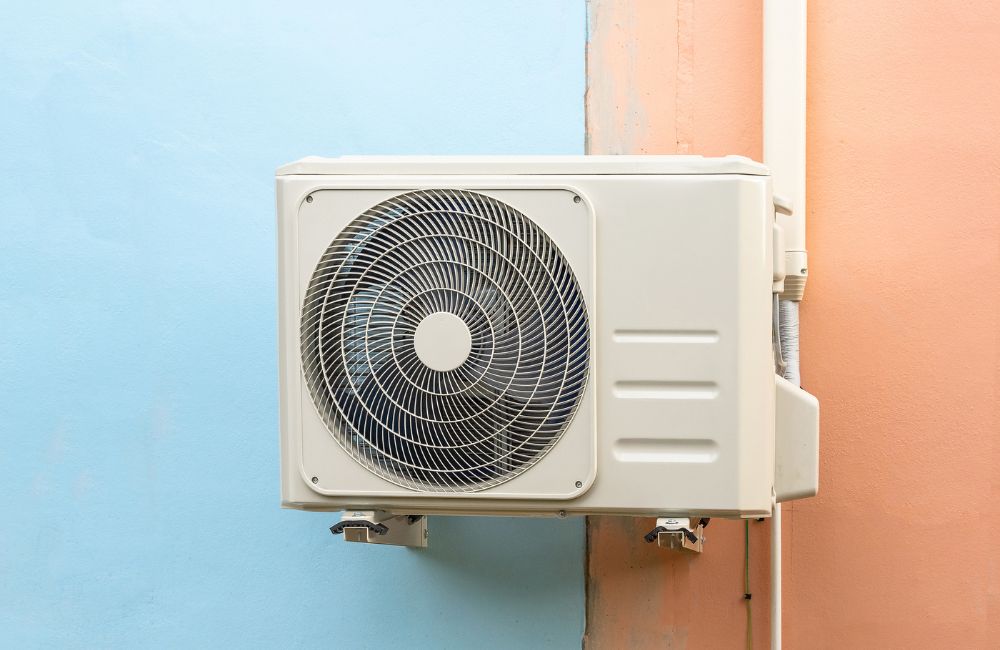
The outdoor condenser plays an important role in the cooling cycle. It releases heat from the refrigerant into the outdoor air.
Check whether the outdoor unit is operating when the thermostat calls for cooling. Do not touch the fan, wiring, capacitor, compressor, or other internal components.
Leaves, grass, dirt, and other debris around the condenser can restrict airflow. Keep the area around the unit clear according to the manufacturer’s recommended clearance.
If the outdoor unit does not start, produces unusual sounds, or repeatedly shuts down, professional HVAC service may be required.
Look for a Frozen Evaporator Coil
A frozen evaporator coil can cause an AC to blow warm or weakly cooled air. Ice may also appear on the refrigerant line or around the indoor unit.
Several conditions can contribute to coil freezing. These include restricted airflow, a dirty filter, low refrigerant caused by a leak, or other equipment problems.
If ice is visible, turn the cooling system off and allow the ice to thaw. Do not use sharp tools or direct high heat to remove it.
If the coil freezes again after normal airflow is restored, an HVAC technician should inspect the system to determine the underlying cause.
Check for Refrigerant Problems
Refrigerant is essential to the cooling process. If the system has insufficient refrigerant, it may not absorb and transfer heat correctly.
Low refrigerant is often associated with a leak rather than normal consumption. Signs can include poor cooling, longer operating cycles, ice formation, and unusual pressure readings.
Refrigerant cannot be accurately diagnosed by simply looking at the outdoor unit. A qualified technician can use appropriate gauges, temperature measurements, leak detection methods, and manufacturer specifications to evaluate the refrigeration system.
Homeowners should not attempt to open refrigerant lines or add refrigerant without the required training and equipment.
Check the AC Circuit Breaker
An electrical interruption can cause part of an HVAC system to stop operating. For example, the indoor blower may operate while the outdoor condenser does not.
Check the electrical panel for a tripped breaker. If a breaker has tripped once, it may be reset according to the property’s electrical safety procedures.
If the breaker trips again, do not repeatedly reset it. Repeated tripping can indicate an electrical or equipment problem that requires professional diagnosis.
Check the Condenser Fan
The outdoor condenser fan moves air across the condenser coil. If the fan does not operate correctly, the system may have difficulty releasing heat.
A failed fan motor, capacitor problem, electrical fault, control issue, or mechanical obstruction can affect fan operation.
Do not place your hands inside the outdoor unit to check the fan. Electrical components can remain hazardous even when the fan is not moving.
A qualified HVAC technician can test the fan motor, capacitor, wiring, controls, and other related components.
Check the AC Vents and Airflow
Warm air can sometimes result from restricted airflow rather than a refrigeration problem. Check the supply vents in the rooms and make sure they are open and unobstructed.
Furniture, curtains, and other objects can block supply registers. Return-air grilles should also remain clear because the HVAC system needs adequate air circulation.
If some rooms receive little or no airflow while others receive normal airflow, the issue may involve ductwork, dampers, the blower, or another airflow component.
Inspect the Condenser Coil for Dirt
The condenser coil transfers heat from the refrigerant to outdoor air. Dirt and debris can reduce heat transfer and affect system performance.
Look for visible dirt, leaves, grass, and other debris around the outdoor coil. Do not bend the thin metal fins or remove electrical panels during a basic inspection.
Heavy coil contamination may require professional cleaning. The appropriate cleaning method depends on the equipment design and manufacturer’s recommendations.
Consider the AC Compressor
The compressor is one of the main components in the refrigeration cycle. It circulates refrigerant between the indoor and outdoor sections of the system.
A compressor problem can result in poor or absent cooling. Electrical issues, overheating, mechanical wear, or other system faults can affect compressor operation.
Compressor diagnosis requires specialized electrical and refrigeration testing. A homeowner should not attempt to open the compressor compartment or work on its electrical connections.
Check the Ductwork
Ductwork transports conditioned air from the indoor unit to individual rooms. Leaks, disconnected sections, crushed flexible ducts, poor insulation, and restrictions can reduce cooling performance.
If the air coming from the vents is only slightly cool or some rooms remain warm, ductwork may be part of the problem.
An HVAC technician can inspect accessible ducts and evaluate airflow. Duct sealing or repair may be necessary when significant leaks or disconnected sections are identified.
Why Does My AC Blow Warm Air at Night?
An AC may appear to blow warmer air at night for several reasons. Thermostat settings, outdoor temperature changes, fan settings, system cycling, airflow restrictions, or equipment problems can affect perceived cooling.
Check the thermostat mode and fan setting first. If the system consistently fails to cool during nighttime operation, record the thermostat temperature and observe whether the outdoor condenser starts during a cooling call.
Persistent problems should be evaluated by an HVAC professional.
Why Is My AC Blowing Warm Air After a Power Outage?
A power interruption can affect HVAC operation. The thermostat may reset, a circuit breaker may trip, or the outdoor unit may fail to restart correctly.
Check the thermostat settings and electrical panel. If the system does not restart normally or the breaker trips again, professional service is recommended.
Do not repeatedly cycle electrical breakers or attempt to repair electrical components without proper training.
When Should You Call an AC Repair Professional?
Professional HVAC service is appropriate when basic thermostat and filter checks do not resolve the problem. It is also needed when the outdoor unit does not operate, the evaporator coil repeatedly freezes, refrigerant leakage is suspected, the compressor fails to start, or electrical components show signs of damage.
Burning odors, smoke, sparks, exposed wiring, repeated breaker trips, and severe mechanical noises are warning signs that require the system to be switched off and inspected.
A technician can test airflow, electrical components, refrigerant conditions, compressor operation, condenser performance, thermostat controls, and other parts of the cooling system.
AEO: Quick Answer to an AC Blowing Warm Air
Why is my AC blowing warm air?
An AC can blow warm air because of incorrect thermostat settings, a dirty air filter, restricted airflow, a frozen evaporator coil, outdoor condenser problems, low refrigerant, electrical faults, ductwork issues, or compressor problems. Start with the thermostat and filter. If the problem continues, professional HVAC diagnosis can identify the exact cause.
What should I check first when my AC blows warm air?
Check that the thermostat is set to Cool, the target temperature is below the current room temperature, the air filter is clean, and the supply vents are open. Check whether the outdoor condenser is operating when cooling is requested. Avoid opening electrical or refrigerant compartments.
Can low refrigerant cause an AC to blow warm air?
Yes. Insufficient refrigerant can reduce the system’s ability to transfer heat. Low refrigerant may be caused by a leak, so the source should be diagnosed and repaired rather than simply adding refrigerant.
GEO: Local AC Repair for Warm Air Problems
People searching for AC repair near me, AC service near me, or HVAC technician near me may be experiencing warm air from their home or business cooling system.
A local HVAC technician can inspect the complete system and determine whether the problem involves the thermostat, filter, indoor blower, evaporator coil, condenser, compressor, refrigerant circuit, electrical components, or ductwork.
A location-focused HVAC service page should clearly identify the service area, AC repair services, common cooling problems, supported HVAC systems, emergency service availability when offered, and contact information. These details provide useful local context for search engines and AI-powered search systems.
Frequently Asked Questions
Why is my AC running but not cooling?
The system may have restricted airflow, a dirty coil, refrigerant problems, condenser issues, compressor problems, or an electrical fault. The exact cause requires system testing.
Can a dirty filter make my AC blow warm air?
Yes. A heavily restricted filter can reduce airflow and contribute to poor cooling or an evaporator coil that freezes.
Why is my AC blowing warm air outside?
If you mean the outdoor unit is releasing warm air, this can be normal. The condenser removes heat from the refrigerant and releases that heat into the outdoor air.
Should I turn off my AC if it is blowing warm air?
If the system has ice, burning odors, smoke, sparks, severe vibration, or repeated electrical problems, turn it off and arrange professional service. If there are no warning signs, basic thermostat and filter checks can be performed first.
How long should I wait after resetting my AC?
Some HVAC systems have built-in protection delays and may take several minutes before the compressor starts. Follow the equipment manufacturer’s instructions rather than repeatedly turning the system on and off.
Can duct leaks cause warm air from an AC?
Yes. Significant duct leakage can allow conditioned air to escape before it reaches the intended room. Duct restrictions and poor insulation can also affect cooling performance.
Conclusion
An AC that blows warm air can have several possible causes. Thermostat settings, dirty filters, blocked airflow, frozen coils, condenser problems, refrigerant issues, electrical faults, ductwork, and compressor problems can all affect cooling performance.
Start with safe checks such as the thermostat, air filter, supply vents, and visible outdoor debris. Do not open electrical compartments, handle refrigerant, or work around energized moving components.
When basic checks do not solve the problem, professional AC service can identify the underlying fault. Proper diagnosis helps determine whether the system needs cleaning, airflow correction, electrical repair, refrigerant leak repair, component replacement, or another HVAC service.

