

How Many Watts Does an AC Use?
Air conditioners use electrical power to remove heat from indoor air. The total watt consumption depends on the AC type, cooling capacity, efficiency rating, compressor technology, and operating conditions. Understanding watt usage helps estimate energy costs and evaluate system efficiency. Watt consumption also affects load planning for generators, inverters, and household circuits.
Average Watt Usage of Common AC Types
A small window AC with a cooling capacity between 5,000 BTU and 6,000 BTU often uses between 450 watts and 700 watts during normal operation. Medium window units between 8,000 BTU and 10,000 BTU may require between 700 watts and 1,200 watts. Large units above 12,000 BTU may use between 1,200 watts and 1,800 watts.
A 1-ton split AC with a capacity of 12,000 BTU usually consumes between 900 watts and 1,400 watts depending on Energy Efficiency Ratio (EER) and Seasonal Energy Efficiency Ratio (SEER) values. A 1.5-ton split AC with a capacity of 18,000 BTU may use between 1,500 watts and 2,200 watts. A 2-ton split AC with 24,000 BTU often uses between 2,200 watts and 3,000 watts.
Inverter AC systems adjust compressor speed. These units often use 30 percent to 50 percent less power during partial load conditions. A 1.5-ton inverter AC may operate between 600 watts and 1,800 watts depending on indoor temperature and set point values.
Factors That Change Watt Usage
Watt consumption rises when room size exceeds AC capacity. Poor insulation increases run time. Higher outdoor temperatures increase total watt draw because the compressor runs longer to maintain the set temperature. A low thermostat setting also increases watt usage. Regular maintenance such as clean filters, correct refrigerant levels, and smooth airflow helps keep watt draw within the expected range.
Breakers, voltage supply, and electrical load ratings must match AC watt requirements. A unit that draws 2,000 watts requires a circuit capable of handling at least 15 amps to 20 amps depending on voltage supply values.
How to Estimate Watt Usage
Watt usage is calculated using the formula:
Watts = BTU ÷ EER.
For example, a 12,000 BTU AC with an EER of 10 uses about 1,200 watts. A higher EER value results in lower watt demand. SEER is used for seasonal efficiency and helps compare annual energy performance.
Smart meters, plug-in watt meters, and HVAC monitoring tools provide real-time watt readings. These values help estimate monthly costs using the formula:
Energy (kWh) = Watts ÷ 1000 × Hours Used.
FAQ
How many watts does a 1-ton AC use?
A 1-ton AC often uses between 900 watts and 1,400 watts, depending on efficiency ratings and compressor type.
Does inverter AC use fewer watts?
Yes. An inverter AC adjusts compressor speed and often uses 30 percent to 50 percent less power during partial load operation.
How many watts does a 1.5-ton AC use?
A 1.5-ton AC may use between 1,500 watts and 2,200 watts. Inverter models may operate lower during moderate temperatures.
Can I run an AC on a generator?
Yes, but the generator must meet the AC watt requirement plus additional starting watts. Many compressors need higher surge watt values during startup.
Conclusion
AC watt usage depends on cooling capacity, efficiency ratings, compressor design, and indoor and outdoor temperature conditions. Small window units may draw between 450 watts and 1,200 watts, while larger split units may use between 1,500 watts and 3,000 watts. Inverter systems consume less power because they reduce compressor speed during low-load periods. Accurate watt estimation supports better energy planning, cost control, and system sizing for homes and commercial spaces.
Why Does My AC Compressor Shut Off After 2-3 Minutes?
Introduction
Nothing is more frustrating than your air conditioning unit shutting off after just a few minutes of operation, leaving you hot and bothered. Understanding why your AC compressor is shutting off can help you troubleshoot the issue and get your cooling system back on track.
Understanding AC Compressor Shutdown
What is an AC Compressor?
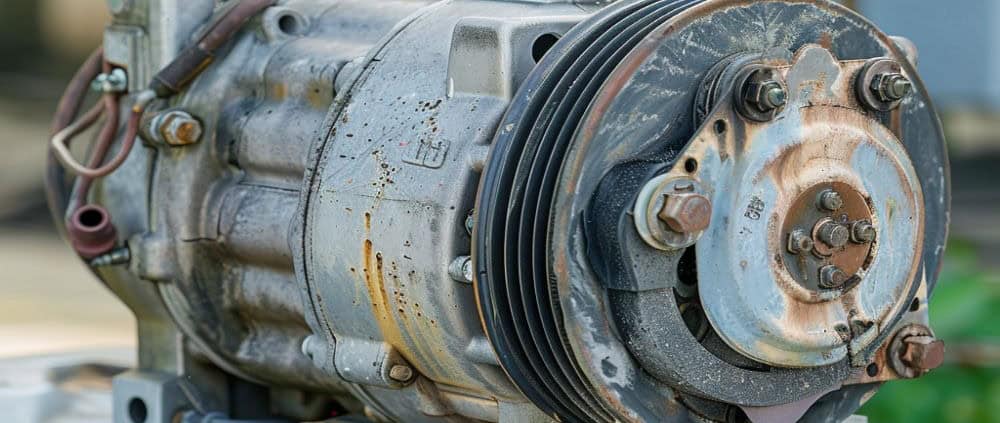
The AC compressor plays a crucial role in the cooling process of your air conditioning system. It compresses and circulates refrigerant, which absorbs heat from inside your home and releases it outside.
Common Causes of AC Compressor Shutdown
Several factors can contribute to your AC compressor shutting off prematurely, ranging from overheating issues to electrical problems and airflow restrictions.
Overheating Issues
Dirty or Blocked Condenser Coils
One common cause of AC compressor shutdown is overheating due to dirty or blocked condenser coils. When the condenser coils are covered in dirt, dust, or debris, they cannot efficiently release heat, causing the compressor to overheat and shut off.
Low Refrigerant Levels
Low refrigerant levels can also lead to compressor overheating and shutdown. Refrigerant is essential for absorbing heat from inside your home and transferring it outside. When refrigerant levels are low, the compressor has to work harder, increasing the risk of overheating.
Electrical Problems
Faulty Capacitor
A faulty capacitor can cause the compressor to shut off unexpectedly. The capacitor provides the electrical charge needed to start the compressor motor. If the capacitor is defective, it may not provide enough power to keep the compressor running.
Defective Relay Switch
A defective relay switch is another electrical issue that can lead to a compressor shutdown. The relay switch controls the flow of electricity to the compressor. If the relay switch is faulty, it may fail to deliver power to the compressor, causing it to shut off.
Thermostat Malfunction
A malfunctioning thermostat can also cause your AC compressor to shut off prematurely. If the thermostat is not accurately detecting the temperature inside your home, it may signal the compressor to shut off even when cooling is still needed.
Airflow Restrictions
Clogged Air Filters
Clogged air filters can restrict airflow to the AC system, causing the compressor to work harder than necessary. When airflow is restricted, the compressor may overheat and shut off to prevent damage.
Blocked Vents or Ductwork
Blocked vents or ductwork can also impede airflow, leading to compressor shutdown. Ensure all vents are open and unobstructed for proper airflow throughout your home.
System Size and Capacity
Undersized AC System
An undersized AC system may struggle to cool your home adequately, causing the compressor to work harder and shut off prematurely. If your AC unit is too small for the space it is trying to cool, it may cycle on and off frequently to try to maintain the desired temperature.
Oversized AC System
Conversely, an oversized AC system may lead to short cycling, where the compressor shuts off before completing an entire cooling cycle. This can result in inefficient operation and unnecessary wear and tear on the compressor.
Environmental Factors
Extreme Temperatures
Extreme temperatures can strain your AC compressor, causing it to shut off prematurely. During heatwaves or cold snaps, your AC system may struggle to keep up with the demand for cooling or heating, leading to frequent shutdowns.
Outdoor Debris or Obstructions
Outdoor debris or obstructions around your AC unit can also interfere with its operation, causing the compressor to shut off unexpectedly. Keep the area around your outdoor unit clear of leaves, branches, and other debris to ensure proper airflow.
Faulty Pressure Switch
A faulty pressure switch can cause the compressor to shut off prematurely if it detects abnormal pressure levels in the refrigerant lines. A professional HVAC technician can diagnose and repair issues with the pressure switch to prevent further compressor shutdowns.
Conclusion
If your AC compressor shuts off after 2-3 minutes, several potential issues could be at play, from overheating problems to electrical issues and airflow restrictions. By understanding the common causes of compressor shutdown and taking proactive steps to address them, you can ensure that your AC system operates efficiently and reliably.
You can get your Top AC Repair Service
FAQs
1. Why does my AC compressor turn off and on repeatedly?
Frequent cycling of the AC compressor could indicate issues with refrigerant levels, airflow, or electrical components. Consult with a professional HVAC technician to diagnose and address the underlying cause.
2. Can I troubleshoot AC compressor issues on my own?
While some basic troubleshooting steps can be taken, such as checking air filters and clearing debris around the outdoor unit, it’s best to consult a qualified HVAC technician for a thorough diagnosis and repair.
3. How often should I replace my AC compressor?
The lifespan of an AC compressor can vary depending on usage, maintenance, and environmental factors. Generally, a well-maintained compressor can last 10-15 years or more.
4. Is it normal for the AC compressor to cycle on and off?
Some AC compressor cycling is done daily as it maintains the desired temperature in your home. However, frequent or constant cycling could indicate an underlying issue that requires attention.
5. What should I do if my AC compressor keeps shutting off?
You’ll be interested: Unlocking the Secrets of Libido Supplements: A Comprehensive GuideIf your AC compressor continues to shut off unexpectedly despite troubleshooting efforts, contact a licensed HVAC technician to diagnose and repair the problem before further damage occurs.