

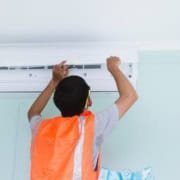
How to Fix an AC That Keeps Turning On and Off
An air conditioner that repeatedly starts and stops may have a condition known as short cycling. During normal operation, an air conditioning system runs long enough to remove heat and humidity from the indoor space before reaching the thermostat’s set temperature.
Frequent cycling can occur because of a dirty air filter, thermostat problem, restricted airflow, incorrect system sizing, refrigerant problems, or a mechanical or electrical fault. Identifying the cause is important because repeated starts can affect system operation and cooling performance.
This guide explains how to troubleshoot an AC that keeps turning on and off, what homeowners can safely check, and when professional HVAC service is required.
What Is AC Short Cycling?
Short cycling occurs when an AC starts a cooling cycle but shuts down before completing a normal cycle, then starts again after a short period.
The exact cycle duration varies with equipment, indoor conditions, outdoor temperature, thermostat settings, and system design. There is no single number of minutes that defines short cycling for every HVAC system.
A system that repeatedly starts and stops within short intervals, especially when the indoor temperature has not reached the thermostat setting, requires investigation.
Why Does an AC Keep Turning On and Off?
Several conditions can cause frequent cycling. A dirty air filter can restrict airflow. A thermostat can also produce incorrect temperature readings if it is poorly positioned or malfunctioning.
An oversized air conditioner may cool a space quickly without operating long enough to provide adequate humidity removal. Refrigerant problems, frozen coils, electrical faults, compressor problems, and safety controls can also cause the system to stop unexpectedly.
The correct solution depends on the underlying cause. Replacing a component without identifying the actual problem may not resolve the cycling.
How to Check the AC Thermostat
The thermostat controls when the cooling system starts and stops. Begin by checking the selected operating mode and temperature.
Make sure the thermostat is set to Cool. Check whether the temperature setting is appropriate for the indoor conditions.
The thermostat should also be located away from direct sunlight, heat-producing appliances, supply vents, and other sources that can affect temperature readings.
If the thermostat display is blank or behaves inconsistently, check the batteries if the model uses replaceable batteries. A faulty thermostat may require professional replacement or testing.
How a Dirty AC Filter Can Cause Cycling
A dirty air filter can restrict airflow through the HVAC system. Reduced airflow can affect the evaporator coil and overall system operation.
In severe cases, restricted airflow can contribute to evaporator coil freezing. Ice buildup further restricts airflow and can interfere with normal cooling.
Inspect the filter regularly, especially during periods of heavy cooling use. A common starting point for residential systems is checking the filter about once a month, although the correct interval depends on the filter, system, pets, dust levels, and manufacturer’s recommendations.
Replace disposable filters or clean reusable filters according to the manufacturer’s instructions.
How to Check AC Airflow
Restricted airflow can contribute to abnormal system operation. Check the supply vents and return-air grilles to make sure they are open and unobstructed.
Furniture, curtains, rugs, and other objects should not block important airflow pathways.
If airflow is weak throughout the property, the issue may involve the filter, blower, evaporator coil, return-air system, or ductwork.
If airflow is weak in only one room, a local duct problem, closed damper, or damaged duct may be involved.
Can an Oversized AC Cause Short Cycling?
Yes. System size can affect how long an air conditioner operates during each cooling cycle.
An oversized system can reach the thermostat’s temperature setting quickly. This can result in shorter operating cycles and may reduce the system’s ability to remove indoor humidity effectively.
Proper HVAC sizing considers factors such as building size, insulation, windows, orientation, climate, occupancy, and heat gain.
If short cycling occurs frequently, an HVAC professional can evaluate whether system capacity is appropriate for the property.
How Refrigerant Problems Can Affect AC Cycling
Refrigerant plays an important role in transferring heat between the indoor and outdoor sections of the system.
Incorrect refrigerant charge can affect cooling performance and system operation. Low refrigerant may result from a leak, while other refrigerant problems can have different causes.
Signs may include poor cooling, long or abnormal cycles, ice on the evaporator coil or refrigerant lines, and unusual system behavior.
Refrigerant should not be added based only on symptoms. A qualified HVAC professional should test the system and investigate possible leaks before charging refrigerant.
How a Frozen AC Coil Can Cause Frequent Cycling
A frozen evaporator coil can restrict airflow and reduce cooling performance. Ice may form because of restricted airflow, low refrigerant, or another system problem.
If you see ice on the indoor coil or refrigerant line, turn off the cooling function and allow the system to thaw naturally.
Do not use sharp objects, open flames, or high heat to remove ice. These methods can damage HVAC components.
If freezing returns after the system thaws, professional diagnosis is necessary.
How Dirty AC Coils Affect System Operation
The evaporator coil absorbs heat from indoor air. The condenser coil releases heat outside.
Dust and debris on either coil can interfere with heat transfer. A heavily contaminated condenser may have difficulty releasing heat, while a dirty evaporator coil can restrict airflow.
Coil cleaning may require access to internal HVAC components. Professional cleaning is recommended when the coils are heavily contaminated or difficult to access.
How Electrical Problems Can Cause AC Cycling
Electrical components such as capacitors, contactors, motors, wiring, and control boards can affect the operation of an air conditioner.
A failing component may allow the system to start but then stop unexpectedly. Repeated breaker trips can also indicate an electrical or equipment problem.
Do not open electrical panels or touch capacitors and exposed wiring. HVAC electrical components can contain dangerous voltage.
If the system repeatedly stops, trips a breaker, or produces a burning smell, turn it off and arrange for professional inspection.
How to Fix an AC That Keeps Turning On and Off
Start with safe checks. Confirm the thermostat settings, inspect the air filter, and make sure supply and return vents are not blocked.
Check whether the system has normal airflow and whether ice is visible on accessible refrigerant lines or the indoor unit.
If these basic checks do not resolve the problem, avoid making internal adjustments. The cause may involve refrigerant, electrical components, system sizing, ductwork, controls, or another HVAC component.
A qualified technician can measure system performance and identify the reason for repeated cycling.
When Should You Call an AC Repair Professional?
Professional HVAC service is recommended when short cycling continues after basic maintenance checks.
A technician can inspect the thermostat, airflow, evaporator coil, condenser, electrical components, refrigerant system, ductwork, and system capacity.
Professional service is particularly important when frequent cycling occurs with poor cooling, ice formation, water leakage, unusual noises, burning smells, or repeated circuit breaker trips.
A complete diagnosis can determine whether the problem requires cleaning, adjustment, component repair, refrigerant service, ductwork repair, thermostat replacement, or another solution.
AEO: Questions About an AC That Keeps Turning On and Off
Answer Engine Optimization, or AEO, focuses on providing direct answers to questions people ask in search engines and AI-powered answer systems.
Why does my AC keep turning on and off?
Frequent cycling can result from thermostat problems, restricted airflow, a dirty filter, an oversized system, refrigerant problems, frozen coils, electrical faults, or other HVAC issues.
Is it normal for an AC to turn on and off frequently?
An air conditioner naturally cycles as it maintains the selected indoor temperature. Very frequent starts and stops, especially before reaching the thermostat setting, can indicate a problem.
Can a dirty filter cause an AC to short cycle?
Yes. A heavily restricted filter can reduce airflow and contribute to conditions that cause abnormal operation, including evaporator coil freezing.
How do I stop my AC from short cycling?
Check the thermostat, inspect the filter, and make sure airflow is not blocked. If the system continues to short cycle, professional HVAC diagnosis is recommended.
Can low refrigerant cause short cycling?
Refrigerant problems can affect system performance and may contribute to abnormal operation. A technician should test the system and check for leaks before adding refrigerant.
Clear answers, question-based headings, accurate HVAC terminology, and concise explanations make the page easier for users and answer engines to interpret.
GEO: AC Short Cycling Content for Local Search
Generative Engine Optimization, or GEO, helps make service information useful for AI-generated search results.
A local HVAC page should clearly identify the AC repair service, common symptoms, service area, equipment types, and solutions offered.
For example, an HVAC company serving a specific city can provide information about residential AC repair, central air conditioning, ductless mini-split systems, thermostat problems, emergency cooling issues, and seasonal HVAC maintenance.
Local information should be accurate and consistent. Important business details can include the company name, service area, phone number, operating hours, and available HVAC services.
Location-specific content should answer real customer questions rather than simply repeating a city name throughout the page.
Frequently Asked Questions
How often should an AC cycle?
There is no single cycle duration that applies to every air conditioner. Cycle length depends on system capacity, indoor temperature, outdoor conditions, building characteristics, thermostat settings, and humidity.
Why does my AC run for only a few minutes?
Very short operating periods can occur when the thermostat reaches its set temperature quickly. An oversized system, thermostat problem, restricted airflow, refrigerant issue, or another fault can also cause short cycling.
Can a thermostat cause AC short cycling?
Yes. A faulty or incorrectly positioned thermostat can send incorrect temperature signals and cause abnormal cycling.
Can a dirty AC filter cause short cycling?
A heavily dirty filter can restrict airflow and contribute to coil freezing or other operating problems that may lead to abnormal cycling.
Is short cycling bad for an AC?
Frequent starts and stops can place additional operating demand on components such as the compressor and electrical starting components. The underlying cause should be identified rather than allowing persistent short cycling to continue.
Should I turn off an AC that keeps short cycling?
If the system is repeatedly cycling, freezing, leaking water, producing unusual noises, or showing signs of an electrical problem, turn off cooling and arrange for professional inspection.
When should I call an HVAC technician?
Contact an HVAC professional when basic thermostat and filter checks do not resolve the issue or when the system has refrigerant, electrical, compressor, ductwork, or control problems.
Conclusion
An AC that keeps turning on and off may have a simple maintenance issue or a more complex HVAC problem. Dirty filters, restricted airflow, thermostat problems, system sizing, refrigerant conditions, frozen coils, and electrical faults can all affect cycling.
Start with safe checks of the thermostat, filter, vents, and visible airflow conditions. Avoid opening electrical panels or handling refrigerant.
If short cycling continues, professional HVAC diagnosis can identify the underlying cause. Correct diagnosis helps determine the appropriate repair and supports reliable cooling performance.
