

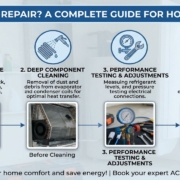
What Is AC Repair? A Complete Guide for Homeowners
Air conditioning systems play an important role in maintaining comfortable indoor temperatures in homes, offices, and commercial buildings. They help control heat, humidity, and indoor air circulation. However, like other electrical and mechanical equipment, air conditioners can develop problems over time. These problems may affect cooling performance, increase electricity consumption, or cause the system to stop working.
AC Repair is the process of identifying, diagnosing, and fixing problems in an air conditioning system. It includes repairing electrical components, cleaning blocked drainage systems, fixing refrigerant leaks, replacing damaged parts, and restoring proper cooling performance.
Understanding how air conditioning systems work and when they need professional repair helps homeowners prevent major equipment problems. This guide explains what AC repair involves, common air conditioner problems, repair procedures, costs, maintenance requirements, and when to contact a professional technician.
What Is AC Repair?
AC Repair refers to the inspection, diagnosis, maintenance-related correction, and restoration of an air conditioning system when one or more components stop working correctly.
An air conditioner contains several mechanical, electrical, and refrigeration components. These parts work together to remove heat from indoor air and transfer it outside. If one component develops a fault, the entire cooling system may experience performance problems.
Professional AC repair services identify the source of the problem and apply the appropriate repair method. Depending on the condition of the equipment, a technician may repair or replace components such as the compressor, capacitor, fan motor, evaporator coil, condenser coil, thermostat, control board, or drainage pipe.
For example, an air conditioner that blows warm air may have a dirty air filter, restricted airflow, a refrigerant leak, or a compressor problem. Each issue requires a different inspection and repair process.
The main purpose of AC Repair is to restore normal system operation, improve cooling performance, maintain safe operation, and reduce the risk of further equipment damage.
How Does an Air Conditioner Work?
Understanding the basic operation of an air conditioner makes it easier to understand why repair services are sometimes necessary.
Most residential air conditioners use a refrigeration cycle to transfer heat from indoor spaces to the outdoor environment. The system uses refrigerant, a compressor, evaporator coil, condenser coil, and expansion device to complete this process.
The cooling process generally involves four main stages.
1. Evaporation: The refrigerant absorbs heat from indoor air as it passes through the evaporator coil. The refrigerant changes from a low-pressure liquid mixture into a gas.
2. Compression: The compressor receives the refrigerant gas and increases its pressure and temperature. It then moves the refrigerant toward the outdoor condenser coil.
3. Condensation: The condenser releases heat into the outdoor air. The refrigerant changes from a high-pressure gas into a liquid.
4. Expansion: The expansion device reduces the refrigerant pressure and temperature before it returns to the evaporator coil.
This cycle continues while the air conditioner operates in cooling mode.
A problem with any of these components can affect the refrigeration cycle. For instance, a faulty compressor may prevent proper refrigerant circulation, while a dirty evaporator coil can reduce heat absorption and airflow.
What Does Professional AC Repair Include?
Professional AC Repair covers several services depending on the type of air conditioner, its condition, and the nature of the problem.
A technician normally begins with an inspection to understand why the system is not working correctly. After identifying the fault, the technician determines whether cleaning, adjustment, component repair, or replacement is necessary.
AC Troubleshooting and Diagnosis
Troubleshooting is the first step in identifying an air conditioning problem. A technician checks the system’s operating condition, electrical connections, thermostat settings, airflow, filters, and major components.
Depending on the symptoms, specialized testing equipment may be used to check electrical voltage, current, refrigerant pressure, and temperature differences.
Accurate diagnosis helps prevent unnecessary repairs and identifies the actual source of the problem.
AC Compressor Repair
The compressor is one of the main components of an air conditioning system. It circulates refrigerant between the indoor and outdoor units.
Compressor problems can cause poor cooling, unusual operating sounds, overheating, or complete system failure.
A technician checks the compressor, electrical connections, starting components, and operating conditions. If the compressor has internal damage, replacement may be necessary.
AC Refrigerant Leak Repair
Refrigerant is essential for heat transfer inside an air conditioning system. A leak can reduce cooling capacity and affect system performance.
Common signs include reduced cooling, ice formation on refrigerant lines, and longer operating cycles.
A professional technician locates the leak, repairs the damaged area where possible, and performs the required leak checks. Refrigerant is then charged according to the manufacturer’s specifications.
Simply adding refrigerant without finding and repairing the leak does not solve the underlying problem.
AC Fan Motor Repair
Indoor and outdoor fan motors help move air through the air conditioning system.
A damaged fan motor may cause weak airflow, overheating, unusual noises, or poor cooling.
Repair procedures may include checking electrical connections, inspecting the motor, testing the capacitor where applicable, and replacing a faulty motor.
AC Drainage System Repair
Air conditioners remove moisture from indoor air during cooling. This moisture collects on the evaporator coil and drains through a condensate pipe.
A blocked or damaged drain line can cause water leakage from the indoor unit.
Technicians inspect the drainage system, remove blockages, and check the drain pan and pipe connections to restore proper water flow.
AC Electrical Repair
Electrical components control the operation of different air conditioning functions. These include capacitors, contactors, circuit connections, control boards, and protective devices.
Electrical faults may prevent an AC from starting, cause repeated shutdowns, or trigger circuit breaker trips.
Electrical testing and repairs should be performed by a qualified technician because air conditioners contain high-voltage components and electrical hazards.
What Are the Most Common AC Problems That Require Repair?
Air conditioners can develop different problems because of regular use, poor maintenance, electrical faults, environmental conditions, and component wear.
Some problems are minor, while others require professional inspection and replacement of damaged components.
AC Is Not Cooling Properly
Poor cooling is one of the most common reasons homeowners request AC Repair services.
Several factors can cause this problem, including dirty filters, restricted airflow, refrigerant leaks, dirty condenser coils, thermostat faults, and compressor problems.
The technician needs to identify the actual cause before selecting the repair method.
AC Is Leaking Water
Water leakage usually occurs when the condensate drainage system becomes blocked or damaged. A dirty evaporator coil, improper installation, or frozen coil can also contribute to drainage problems.
If water continues to leak, it may damage walls, ceilings, furniture, or nearby electrical equipment.
AC Is Making Unusual Noise
An air conditioner may produce buzzing, rattling, grinding, clicking, or squealing sounds.
These noises can indicate loose components, fan problems, motor damage, electrical faults, or compressor issues.
A sudden change in operating noise should be investigated rather than ignored.
AC Is Turning On and Off Frequently
Frequent starting and stopping is known as short cycling. It can result from thermostat problems, restricted airflow, incorrect system sizing, refrigerant issues, or electrical faults.
Short cycling can increase equipment wear and affect cooling efficiency.
AC Is Not Turning On
An air conditioner may fail to start because of power supply problems, a tripped circuit breaker, faulty wiring, a damaged capacitor, thermostat issues, or control board failure.
Homeowners can check the thermostat settings and power supply. However, electrical components should only be inspected by a qualified technician.
AC Is Producing a Bad Smell
Unpleasant smells may come from dirty filters, moisture buildup, contaminated drainage components, or microbial growth inside the unit.
A burning smell can indicate an electrical problem. In that situation, turn off the system and arrange a professional inspection.
What Is the AC Repair Process?
A professional repair service generally follows a structured process. The exact steps depend on the air conditioner model and the reported problem.
Initial inspection: The technician collects information about the problem and examines the indoor and outdoor units.
Problem diagnosis: The system is tested to identify the faulty component or operating condition.
Repair estimate: The technician explains the required work, replacement parts, and estimated cost.
Repair work: The necessary cleaning, adjustment, electrical repair, leak repair, or component replacement is completed.
System testing: The air conditioner is operated to check cooling performance, airflow, drainage, electrical operation, and other relevant functions.
Final inspection: The technician checks that the reported issue has been addressed and explains any further maintenance requirements.
This process helps homeowners understand what happens during a professional AC Repair appointment.
How Much Does AC Repair Cost?
The cost of AC repair depends on the type of air conditioner, the damaged component, labor requirements, replacement parts, and service location.
A simple drainage blockage may require less work than a compressor replacement. Similarly, cleaning a filter is different from repairing a refrigerant leak or replacing an electronic control board.
The following factors commonly influence repair costs:
- Type of problem: Minor adjustments and major component failures have different repair requirements.
- Air conditioner type: Split, window, inverter, and commercial systems may require different parts and labor.
- Replacement components: Compressor, fan motor, capacitor, and PCB prices vary.
- Labor charges: Repair complexity and technician experience can affect service fees.
- Location: Travel distance and local service rates may influence the final price.
Homeowners should request an inspection and written estimate before approving major repairs. The estimate should explain labor costs, replacement parts, and any additional charges.
When Should You Call a Professional AC Repair Technician?
Some air conditioner problems require immediate professional attention. Continuing to operate a damaged system can increase equipment stress and create additional risks.
Contact a qualified technician when your air conditioner repeatedly stops working, produces warm air despite correct settings, leaks water continuously, trips the circuit breaker, or makes unusual mechanical noises.
Professional assistance is also necessary when the system has refrigerant leaks, compressor faults, damaged electrical wiring, or frozen evaporator coils.
Avoid opening electrical compartments, handling refrigerants, or attempting compressor repairs without proper training and equipment.
Early diagnosis can help prevent a small issue from developing into a more expensive equipment failure.
What Is the Difference Between AC Repair and AC Maintenance?
AC repair and AC maintenance are related services, but they have different purposes.
AC maintenance focuses on preventing problems and keeping the system in good operating condition. It commonly includes filter cleaning, coil inspection, drainage checks, electrical inspection, and performance testing.
AC repair focuses on correcting an existing fault. It may involve fixing refrigerant leaks, replacing damaged motors, repairing electrical connections, or addressing compressor problems.
For example, cleaning an air filter is a maintenance task. Replacing a failed fan motor is a repair task.
Regular maintenance can help identify developing issues before they cause unexpected breakdowns. However, maintenance does not eliminate the possibility of mechanical or electrical failure.
How Can Homeowners Prevent Common AC Problems?
Proper air conditioner care helps maintain cooling performance and reduce avoidable breakdowns.
Homeowners can clean or replace air filters according to the manufacturer’s recommendations. Dirty filters restrict airflow and can affect system performance.
Keep the outdoor condenser unit free from leaves, dust, and other obstructions. Maintain sufficient clearance around the unit so that outdoor air can circulate properly.
Check the thermostat settings and make sure the indoor unit has an unobstructed air return and supply path. Pay attention to unusual sounds, water leakage, and changes in cooling performance.
Schedule professional maintenance based on the manufacturer’s instructions and the operating conditions of the system.
These steps help maintain the equipment, but technical inspections and repairs should be handled by trained professionals.
Frequently Asked Questions About AC Repair
What Is AC Repair?
AC Repair is the process of diagnosing and fixing problems in an air conditioning system. It includes repairing electrical components, compressors, fan motors, drainage systems, refrigerant leaks, and other faulty parts to restore normal operation.
How Do I Know If My AC Needs Repair?
Common warning signs include weak cooling, warm air, water leakage, unusual noises, frequent shutdowns, bad smells, and increased operating time. These symptoms may indicate a mechanical, electrical, or airflow problem.
How Much Does AC Repair Cost?
AC repair costs depend on the type of problem, air conditioner model, replacement parts, labor charges, and service location. A technician must inspect the system to provide an accurate estimate.
How Long Does AC Repair Take?
The repair time depends on the fault and the availability of replacement parts. Minor repairs may take less time, while compressor replacement, refrigerant leak repair, or complex electrical work may require several hours or additional visits.
Can I Repair My Air Conditioner Myself?
Homeowners can perform basic tasks such as cleaning accessible filters and checking thermostat settings. However, electrical repairs, refrigerant handling, compressor work, and internal component replacement should be performed by qualified technicians.
Why Is My AC Running but Not Cooling?
Possible causes include dirty filters, blocked airflow, low refrigerant due to a leak, dirty condenser coils, thermostat problems, or compressor failure. A professional inspection is needed to identify the exact cause.
How Often Should an Air Conditioner Be Serviced?
Service frequency depends on the manufacturer’s recommendations, usage, environment, and system condition. Many residential systems benefit from professional inspection at least once a year. Systems used heavily or exposed to dusty conditions may need more frequent attention.
Is It Better to Repair or Replace an AC?
The decision depends on the equipment’s age, repair cost, energy efficiency, condition, and expected remaining service life. A technician can compare the cost of repairing the existing unit with the cost of installing a suitable replacement.
Does AC Repair Improve Cooling Efficiency?
Repairing faulty components can restore normal airflow, heat transfer, and system operation. The improvement depends on the original problem and the condition of the equipment.
Why Does My AC Keep Leaking Water?
Common causes include a blocked condensate drain line, damaged drain pan, frozen evaporator coil, or improper installation. A technician can inspect the drainage system and identify the source of the leakage.
Conclusion
AC Repair is an important service for maintaining the performance, safety, and reliability of residential and commercial air conditioning systems. Problems such as poor cooling, water leakage, electrical faults, unusual noises, and compressor failure can affect normal operation.
Understanding common AC problems helps homeowners recognize warning signs and arrange professional assistance when necessary. Regular maintenance, proper filter cleaning, and timely inspections can also reduce avoidable equipment problems.
When an air conditioner develops a fault, professional diagnosis is essential to identify the cause and select the correct repair method. A qualified technician can inspect the system, repair damaged components, test its operation, and help restore comfortable indoor temperatures.
