
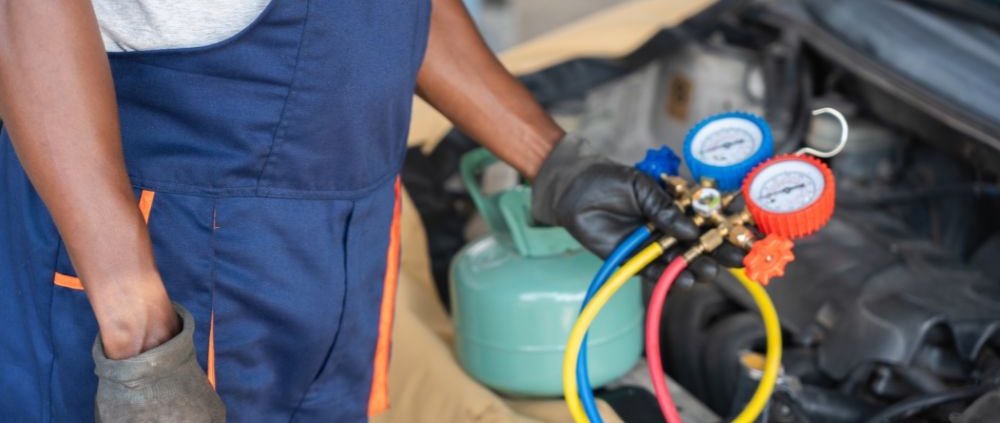
How Much Does It Cost to Fix AC in a Car
A car air conditioning (AC) system is essential for comfort during hot weather. Over time, it can develop issues that reduce performance or stop working entirely. Understanding the costs involved in repairing a car AC system is important for budgeting and maintenance planning.
Factors Affecting AC Repair Costs
The cost to fix a car AC depends on several factors. The type of problem, the make and model of the vehicle, and labor rates all influence the total expense. Common issues include refrigerant leaks, a faulty compressor, a broken condenser, or a malfunctioning blower motor.
Refrigerant recharge is one of the most common fixes. The cost for this ranges between $100 and $300. This depends on the type of refrigerant, as newer vehicles often use R-134a or R-1234yf. Older vehicles might use R-12, which is less common and more expensive.
Replacing a compressor is a more costly repair. The compressor is the main component that circulates refrigerant through the AC system. Labor and parts can push the total cost between $500 and $1,200. Prices vary depending on whether the replacement is aftermarket or OEM (original equipment manufacturer).
A condenser replacement can also be expensive. The condenser cools the refrigerant before it circulates through the cabin. Parts and labor for this repair typically range from $300 to $900.
Other parts, such as the expansion valve, evaporator, or AC clutch, can also fail. Repairing or replacing these components may cost between $200 and $800, depending on the vehicle and part availability.
Labor rates vary by location and repair shop. Dealerships usually charge higher labor fees compared to independent mechanics. Average labor costs range from $80 to $150 per hour. More complex AC repairs can require 2 to 5 hours of labor.
Signs Your AC Needs Repair
Several signs indicate that a car AC needs repair. Warm air blowing from the vents, unusual noises, leaks under the car, or a sweet chemical smell inside the cabin are all warning signs. Identifying the problem early can reduce costs, as minor issues like leaks can be fixed faster and with less expense.
Routine maintenance also helps reduce repair costs. Checking refrigerant levels, cleaning the condenser, and inspecting belts and hoses can prevent larger problems from developing. Vehicles with neglected AC systems are more likely to require major repairs, which are significantly more expensive.
How to Save on AC Repairs
Choosing the right repair shop can reduce costs. Independent mechanics often offer lower labor rates than dealerships. Using high-quality aftermarket parts instead of OEM components can also reduce expenses. Some repair shops offer AC diagnostic services for around $50 to $100, helping identify the exact problem before committing to expensive repairs.
Regular maintenance is the most cost-effective way to manage AC expenses. Inspecting the system annually, recharging refrigerant when needed, and replacing worn parts prevent costly breakdowns.
FAQ
What is the average cost to recharge a car AC?
Recharging a car AC typically costs between $100 and $300, depending on the refrigerant type.
How much does it cost to replace a compressor?
Compressor replacement usually ranges from $500 to $1,200, including parts and labor.
Can a small leak be fixed cheaply?
Yes, minor refrigerant leaks can be repaired for $150 to $300, depending on the location of the leak.
Do labor rates vary by location?
Yes, labor rates vary. Dealerships charge more, while independent shops often offer lower rates between $80 and $150 per hour.
How can I prevent expensive AC repairs?
Regular inspections, maintaining proper refrigerant levels, and addressing minor issues promptly reduce the risk of major repairs.
Conclusion
The cost to fix a car AC ranges widely depending on the type of problem and the vehicle model. Minor issues such as refrigerant recharges are the least expensive, averaging $100 to $300. Major repairs like compressor or condenser replacement can exceed $1,000. Early diagnosis, routine maintenance, and choosing the right repair shop help manage costs effectively. Maintaining the AC system not only ensures comfort during hot weather but also extends the life of the vehicle’s components. Accurate assessment of the problem and understanding repair costs enable car owners to plan and budget efficiently.

Which Equation Can Be Used to Find the Length
Finding the length of a side in a right triangle often involves using trigonometric functions. When one angle and the length of the hypotenuse or another side are known, sine, cosine, or tangent functions can be applied. Trigonometry provides a reliable way to calculate unknown sides in triangles using angles and side ratios.
Understanding the Problem
Consider a triangle with an angle of 40 degrees and a side of length 10 units. To find the length of a specific side, such as the side opposite or adjacent to the angle, the sine and cosine functions can be used. The general formulas are:
Sine function: sin(θ) = opposite / hypotenuse
Cosine function: cos(θ) = adjacent / hypotenuse
Here, θ represents the known angle, the opposite is the side across from the angle, the adjacent is the side next to the angle, and the hypotenuse is the longest side of the right triangle.
Using Sine to Find the Length
If the length of the hypotenuse is 10 units and the side opposite the 40-degree angle is unknown, the sine function can be applied. The equation becomes:
10 × sin(40°) = opposite side
Calculating sin(40°), which is approximately 0.6428, gives:
10 × 0.6428 = 6.428 units
This value represents the length of the side opposite the 40-degree angle.
Using Cosine to Find the Length
Similarly, if the side adjacent to the 40-degree angle is unknown, the cosine function can be used. The equation is:
10 × cos(40°) = adjacent side
Calculating cos(40°), which is approximately 0.7660, gives:
10 × 0.7660 = 7.66 units
This provides the length of the side adjacent to the 40-degree angle.
Choosing the Correct Equation
The choice between sine and cosine depends on which side is unknown. For the side opposite the angle, the sine function is appropriate. For the side adjacent to the angle, the cosine function is used. These formulas rely on the known angle and hypotenuse length.
It is important to identify the right triangle and clearly label the sides relative to the given angle. Mislabeling can result in incorrect calculations. Using a calculator or trigonometric table ensures accuracy when working with decimal values.
FAQ
Can tangent be used instead of sine or cosine?
Yes, tangent can be used if one side (opposite or adjacent) and the other side are known. Tangent is the ratio of opposite to adjacent.
What if the angle is not 40 degrees?
The same principle applies. Replace 40° with the known angle in the sine or cosine formula to calculate the side length.
Do I need the hypotenuse to use sine or cosine?
Yes, sine and cosine functions require knowledge of the hypotenuse when calculating the opposite or adjacent side.
Are the results approximate?
Yes, trigonometric functions are often approximated to four decimal places, and the final side lengths are rounded accordingly.
Can this method be used for non-right triangles?
For non-right triangles, the law of sines or the law of cosines is required instead of basic sine and cosine functions.
Conclusion
To find the length of a side in a right triangle, the sine and cosine equations are most commonly used. The sine function calculates the side opposite a given angle, while the cosine function calculates the side adjacent to the angle. For a triangle with a 40-degree angle and hypotenuse of 10 units, the equations 10 × sin(40°) = opposite side and 10 × cos(40°) = adjacent side provide the required lengths. Correct identification of sides and precise calculation ensure accurate results. Trigonometric methods are efficient, widely applicable, and essential for solving triangle problems.
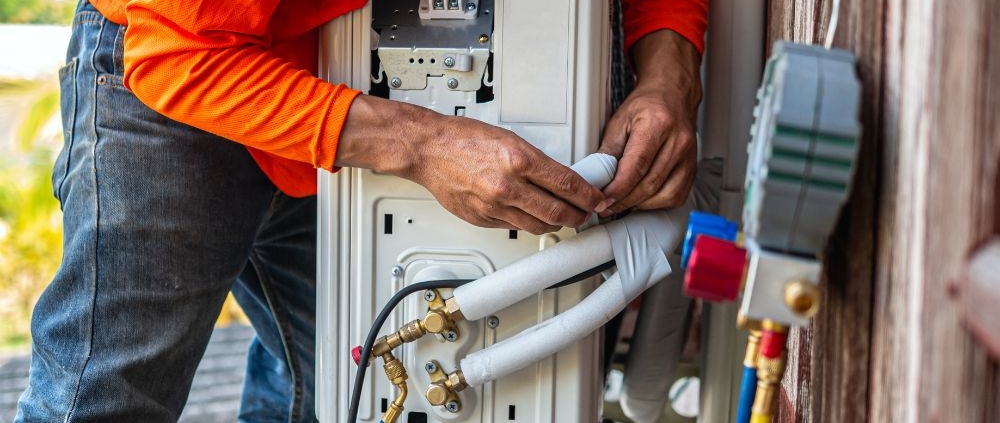
How to Tell If AC Compressor Is Bad
The air conditioning (AC) compressor is a critical component of any cooling system. It pressurizes and circulates the refrigerant through the AC system, allowing heat to be removed from indoor air. A malfunctioning compressor can reduce cooling efficiency or stop the system from working entirely. Identifying signs of a bad AC compressor early can prevent further damage and expensive repairs.
Signs of a Bad AC Compressor
One of the primary indicators of a failing AC compressor is reduced cooling performance. If the air coming from the vents is warmer than usual, or if the system takes longer than normal to cool a room, the compressor may be losing its ability to circulate refrigerant effectively.
Strange noises are another common sign. A failing compressor can produce loud or unusual sounds, such as rattling, grinding, or squealing. These noises often indicate internal mechanical problems, such as worn bearings or damaged components within the compressor.
Another indicator is a system that fails to turn on. A bad compressor may prevent the AC from starting even when the thermostat is set correctly. Electrical issues such as blown fuses or tripped breakers can also point to a failing compressor.
Visible signs of damage, including refrigerant leaks around the compressor unit, can suggest a problem. Refrigerant leaks reduce pressure in the system, leading to inefficient cooling and potential ice formation on the evaporator coil. Over time, low refrigerant levels can cause additional strain on the compressor, accelerating failure.
The AC system may also cycle on and off more frequently than usual. Short cycling occurs when the compressor overheats or struggles to maintain proper pressure. This behavior not only reduces comfort but can also cause long-term damage to the system.
High electrical consumption is another sign. A failing compressor may draw excessive amps, increasing electricity usage. Monitoring the AC’s electrical consumption or noticing a sudden rise in energy bills can indicate a problem with the compressor.
Causes of AC Compressor Failure
AC compressors can fail due to several reasons. Electrical issues, such as faulty wiring or damaged capacitors, can prevent the compressor from operating correctly. Mechanical wear over time is another factor, as internal components degrade after years of operation.
Low refrigerant levels or leaks are common contributors to compressor failure. Without proper refrigerant flow, the compressor must work harder to maintain cooling, increasing the risk of overheating. Lack of maintenance, including infrequent inspections and dirty coils, can accelerate wear and tear, leading to premature failure.
How to Test the AC Compressor
Testing a compressor requires measuring electrical continuity and system pressure. Using a multimeter, check for continuity across the compressor’s terminals. A lack of continuity may indicate an internal electrical fault. Checking system pressures with gauges can reveal whether the compressor is building the correct pressure in the high and low sides of the AC system.
Listening for proper operation is also helpful. When the AC turns on, the compressor should start with minimal noise and run steadily. Irregular sounds or failure to engage often point to mechanical or electrical problems.
FAQ
Can I drive with a bad AC compressor?
Yes, the vehicle can still operate, but the AC will not cool effectively. Prolonged operation of a failing compressor can lead to further system damage.
How long does an AC compressor last?
Typically, a compressor lasts 8 to 12 years depending on usage, maintenance, and operating conditions.
Is a blown fuse a sign of a bad compressor?
A blown fuse can indicate electrical issues, which may include a failing compressor or related components such as the capacitor or relay.
Can low refrigerant damage the compressor?
Yes. Low refrigerant causes the compressor to overwork and overheat, leading to potential mechanical failure.
Do all AC problems mean the compressor is bad?
No. Issues like clogged filters, thermostat malfunctions, or refrigerant leaks can mimic compressor problems. Proper diagnosis is essential.
Conclusion
A failing AC compressor can manifest through reduced cooling, unusual noises, system failure to start, refrigerant leaks, short cycling, and increased electrical consumption. Causes include mechanical wear, electrical problems, low refrigerant, and poor maintenance. Testing the compressor with a multimeter and pressure gauges can help identify faults. Detecting issues early and addressing them promptly prevents further damage and maintains effective cooling. Regular system inspections and timely maintenance are key to prolonging the lifespan of the AC compressor and ensuring reliable performance.